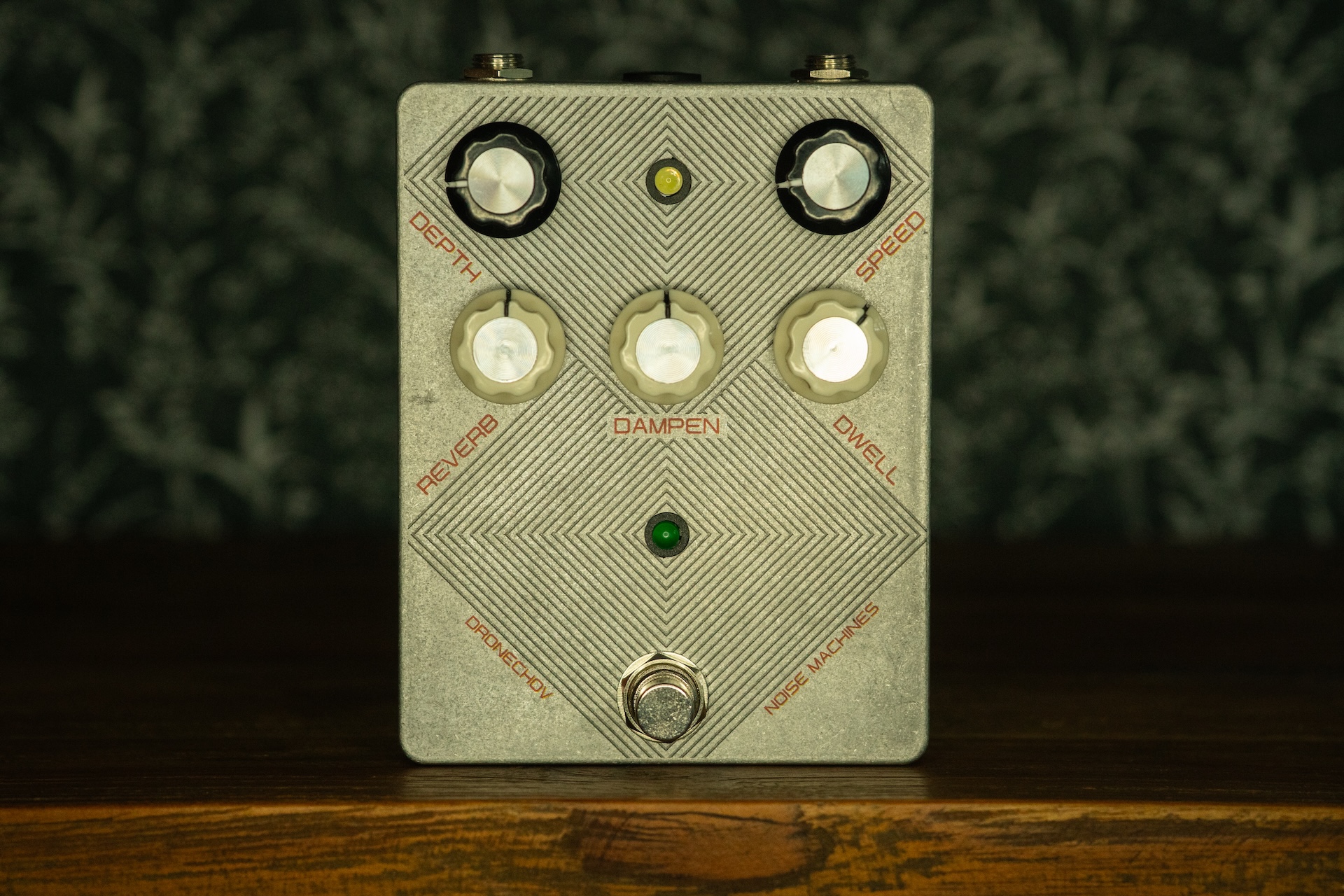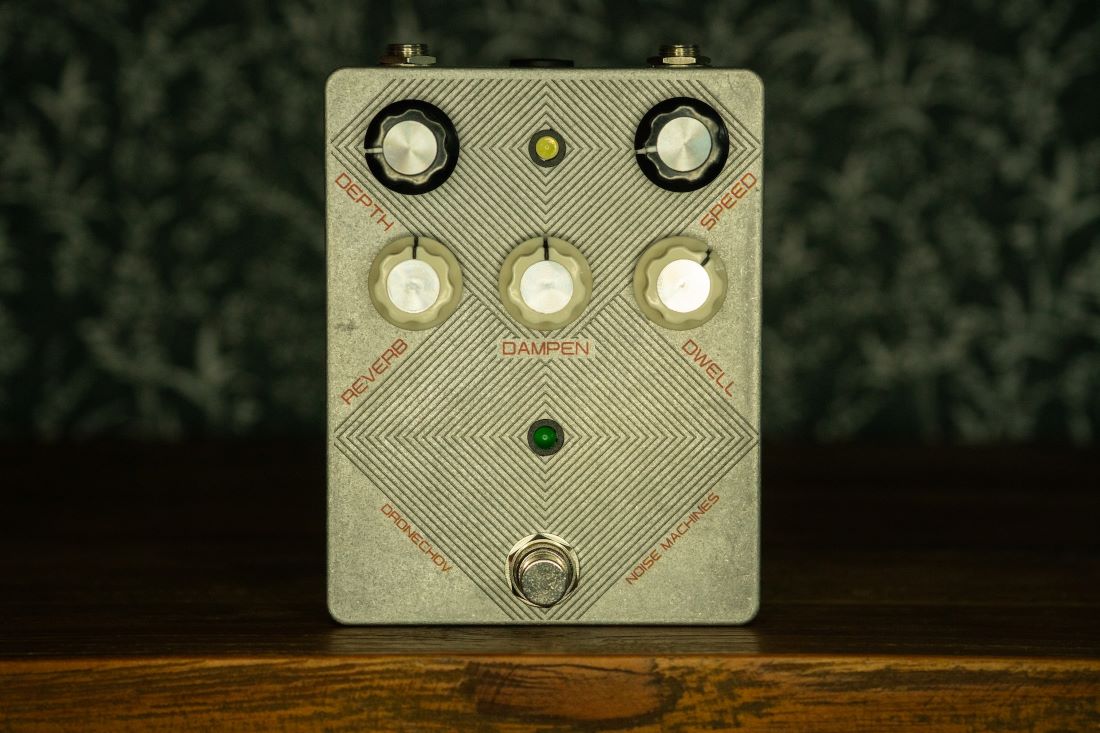
Deze sympathieke gitaarbouwer uit Utrecht kwamen we tegen op Amsterdam Guitar Heaven. Na het spelen op een aantal van zijn pedalen wisten we meteen: Dronechove Noise Machines is absoluut voer voor UpsizingGear. Een interview met oprichter Daniel Donchov (Engels).
Where does the name originate from?
The name came as a joke from a friend of mine, who probably has the biggest DNM pedal collection. Dronechov is a wordplay on my last name, Donchov, and “drone,” as I used to be part of the ambient/drone scene in Bulgaria.
Your company is based in Utrecht, but you weren’t born in the Netherlands. Can you explain?
I am originally from Bulgaria and have been part of the underground scene there for over 20 years. I moved to the Netherlands in 2018 and have been living in Utrecht since 2019. My pedal obsession started here, so this can be considered the birthplace of DNM.
What pedals do you currently have in your catalogue, and can you briefly explain what they are and what they do?
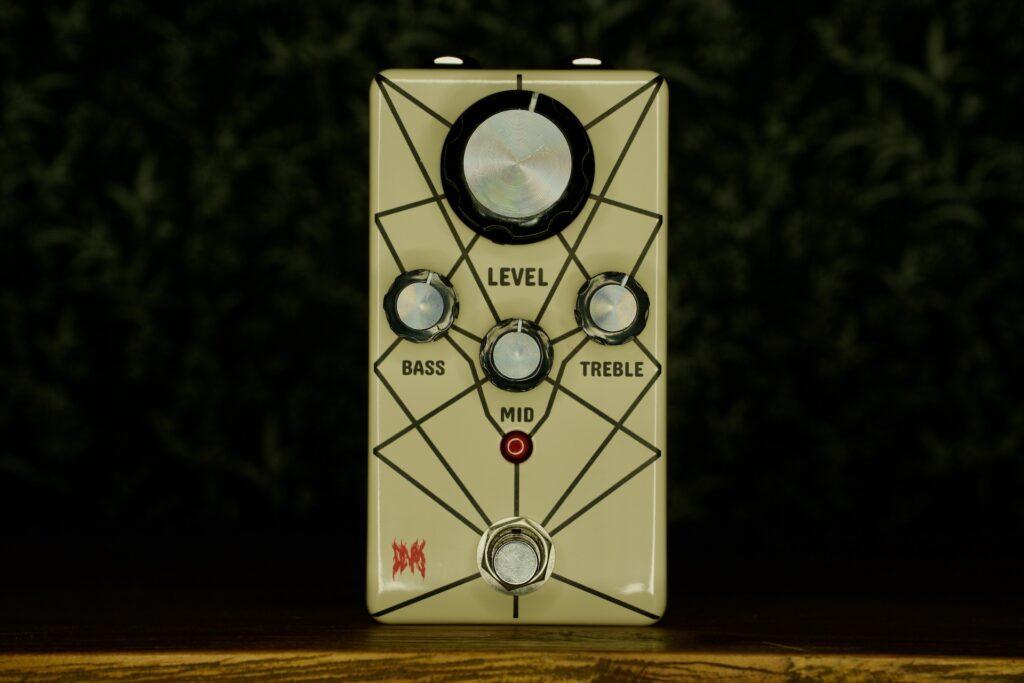
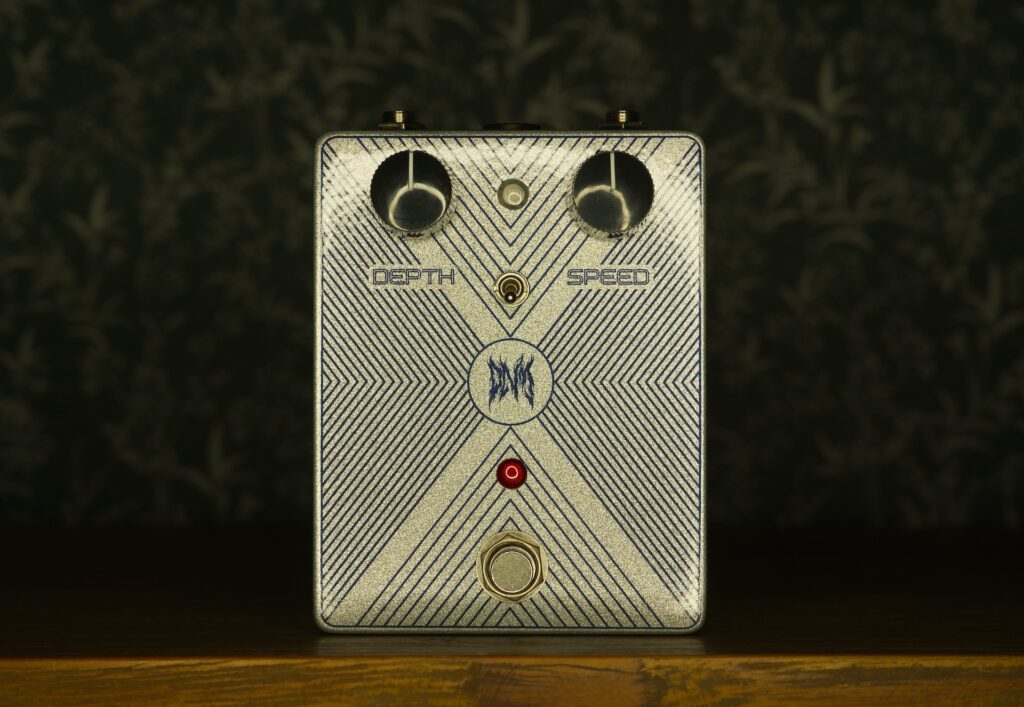
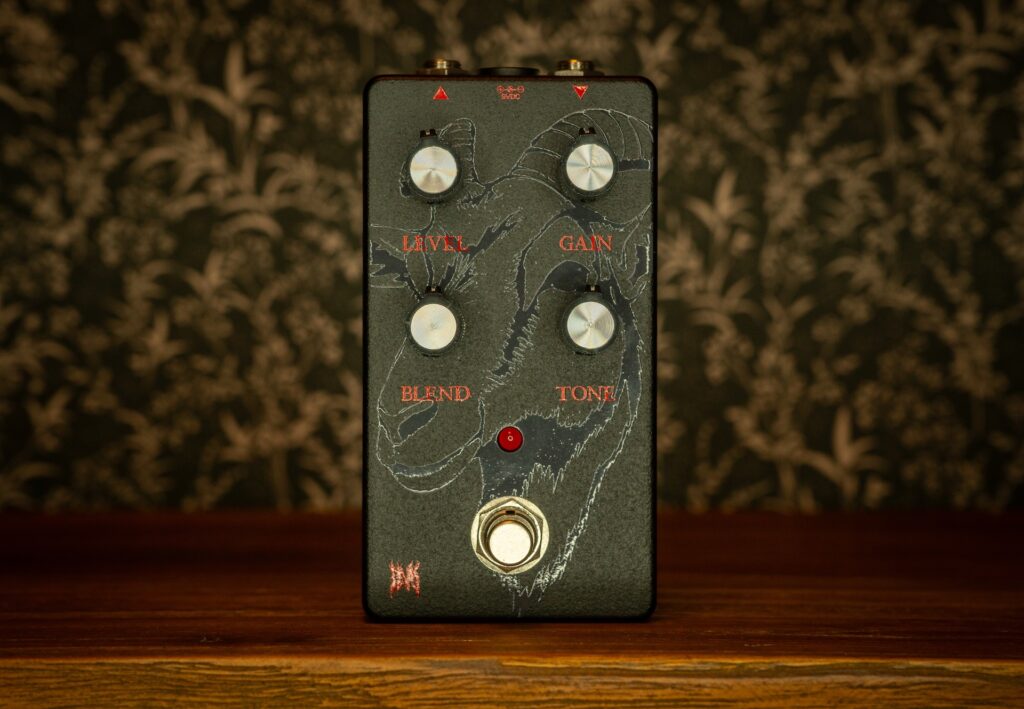
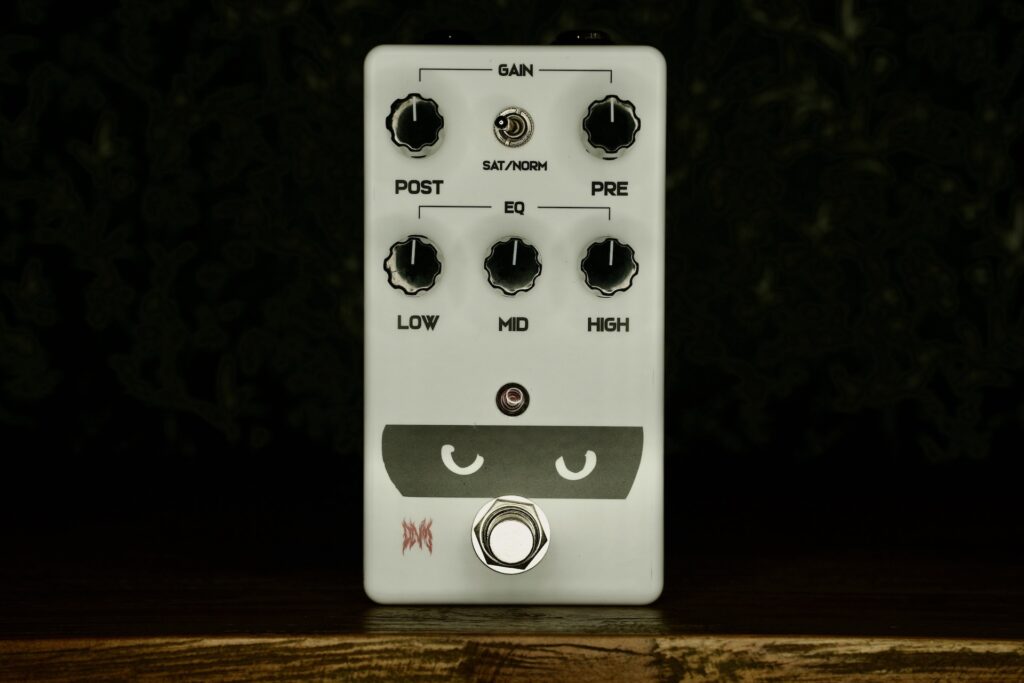
Currently, the DNM catalogue consists of five pedals, two of which are my own designs, and three others inspired by popular pedals, made to order. The two original DNM pedals are Black Phillip, a high-gain fuzzy distortion, and Megaphone, a clean boost pedal with a three-band EQ. The other three are Tiental, my version of the preamp section of the Decade amp by Peavey, Vibraverb, a vibrato and reverb pedal, and A Void, a modernized version of the Maestro MP-1 phaser from the 70s.
When you’re designing a new pedal, what is your approach?
I use existing circuits and concepts as a starting point. I begin by studying a design that I find interesting, analyzing its different stages. Once I understand the circuit, I start modifying it in ways that seem interesting. Often, accidents produce really nice results. I aim for a sound that I enjoy.
I frequently take parts of circuits that I like and combine them with others. This is actually my favorite approach.
A lot of pedal builders build on classic designs. Your Vibraverb is your own creation. Why not focus only on unique designs?
The Vibraverb is partially based on a classic design, the Magnavibe Vibrato. However, the reverb part is not an existing mass-produced design. I love the sound of it and decided to use it as a foundation to build something unique. I am also using it as a base for a pedal I am currently developing.
I admire many existing designs and draw inspiration from my background in the experimental scene. With this background, I aim to introduce more approachable designs. If something is truly niche, there may not be enough interest to keep it affordable. I will definitely focus more on my own designs in the future.
I’ve played the Vibraverb and immediately liked it. What do you think is the magic behind this pedal?
The Vibraverb uses a Belton Brick reverb module, which emulates the classic Fender spring tank sound. The magic behind it is that it doesn’t sound overly artificial or “digital,” despite being based on a relatively simple digital module. There’s also a slight nostalgic feeling in its sound.
What kind of guitar players do you aim for?
I don’t have a specific target group in mind. My roots are in underground metal and experimental and ambient music, so my pedals naturally attract musicians from these genres. One of my favorite things is hearing my pedals played by different types of musicians. At Amsterdam Guitar Heaven, a jazz guitarist played the Black Phillip, and I had never heard it played that way before, it was fascinating.
I design my pedals for everyone, especially people who enjoy experimenting. I’ve heard them used by shoegaze, doom metal, post-punk, and screamo bands, each adding unique character to their sound. I have played bass for much of my life, and I design all my pedals to work with bass as well.
Next in line, what’s on your wish list to build next?
My general goal is to focus on pedals that are interesting and perhaps slightly unusual. The next release will likely be a distortion pedal, but a fuzzy reverb and a lo-fi pedal are also in the works.
A lot of guitarists use pedals. Do you have a general tip for using them, or something they may not have tried yet but is great to do?
Yes, don’t spend too much time reading about what pedals do. Use that time to actually play and experiment. Play around, have fun, and try new things. The correct pedal order is always the one that sounds best to you. Always experiment with everything at your disposal.
Five years from now, what are your dreams for Dronechov Noise Machines?
When I started making clones and experimenting with pedals five years ago, I wasn’t thinking about starting a company. I just went with the flow. I plan to continue experimenting, having fun, and not making too many plans. I prefer letting things develop naturally.